What is sample viscosity?
Sample viscosity is the measure of a fluid's resistance to flow, describing how easily it deforms under shear or tensile stress. It quantifies the internal friction between layers of the fluid as they move relative to each other. Honey has a higher viscosity than water because it flows more slowly under the same conditions.
In biophysics the term refers to the internal resistance of a biological or biochemical fluid, such as cytoplasm, blood or a protein solution, to flow or deformation.
Why measure sample viscosity?
Sample viscosity is measured because it changes the size you measure. Techniques that determine molecular size from diffusion do not measure size directly. They measure how quickly a molecule diffuses and then convert that into a radius, and viscosity is one of the terms in that conversion. An incorrect viscosity will yield a wrong size.
How does viscosity affect the measured size?
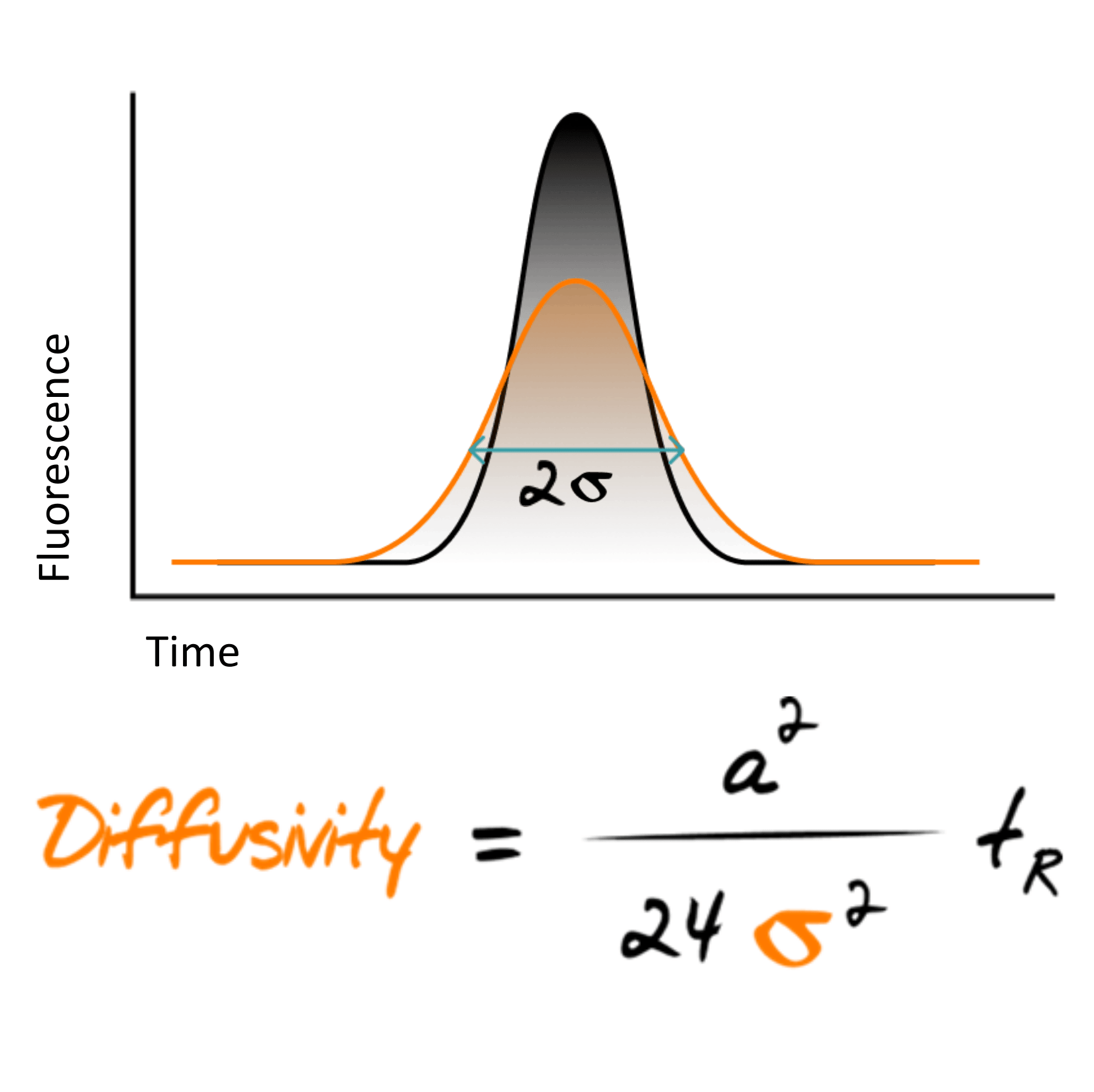
In a FIDA assay the diffusivity of a given molecule is obtained through the Taylor equation, and the software handles that calculation. Diffusivity is then converted into hydrodynamic radius through the Stokes-Einstein correlation.
The Stokes-Einstein correlation describes how the diffusion rate of particles in a fluid depends on the particle size, the viscosity of the fluid and the temperature. It explains how particles move faster in less viscous fluids, at higher temperatures, or when they are smaller. In the formula, Kb is the Boltzmann coefficient, T is the temperature, D is the diffusivity and the Greek letter eta is the viscosity of the sample.
The Boltzmann coefficient is a fundamental constant in physics that connects the microscopic world of individual particles to the macroscopic properties of materials such as temperature and energy. Its value is 1.380649 x 10 to the power minus 23 joules per kelvin.
Because viscosity sits inside that conversion, an incorrect viscosity will yield a wrong size. The measurement itself can be perfectly executed and still return the wrong answer.
Why is this a common source of error?
For most diffusivity based techniques you have to provide the sample viscosity yourself. That means measuring it beforehand on a viscometer, or assuming it. Both are error prone, and a wrong viscosity input changes the entire size calculation.
What makes sample viscosity change?
Viscosity is not fixed. Two things to keep in mind: viscosity is temperature dependent, and viscosity is concentration dependent.
Viscosity changes follow exponential functions rather than linear ones. In a titration series that matters, because the effect grows disproportionately at the top of the series, where the analyte concentration is highest.
How is viscosity measured in a FIDA assay?
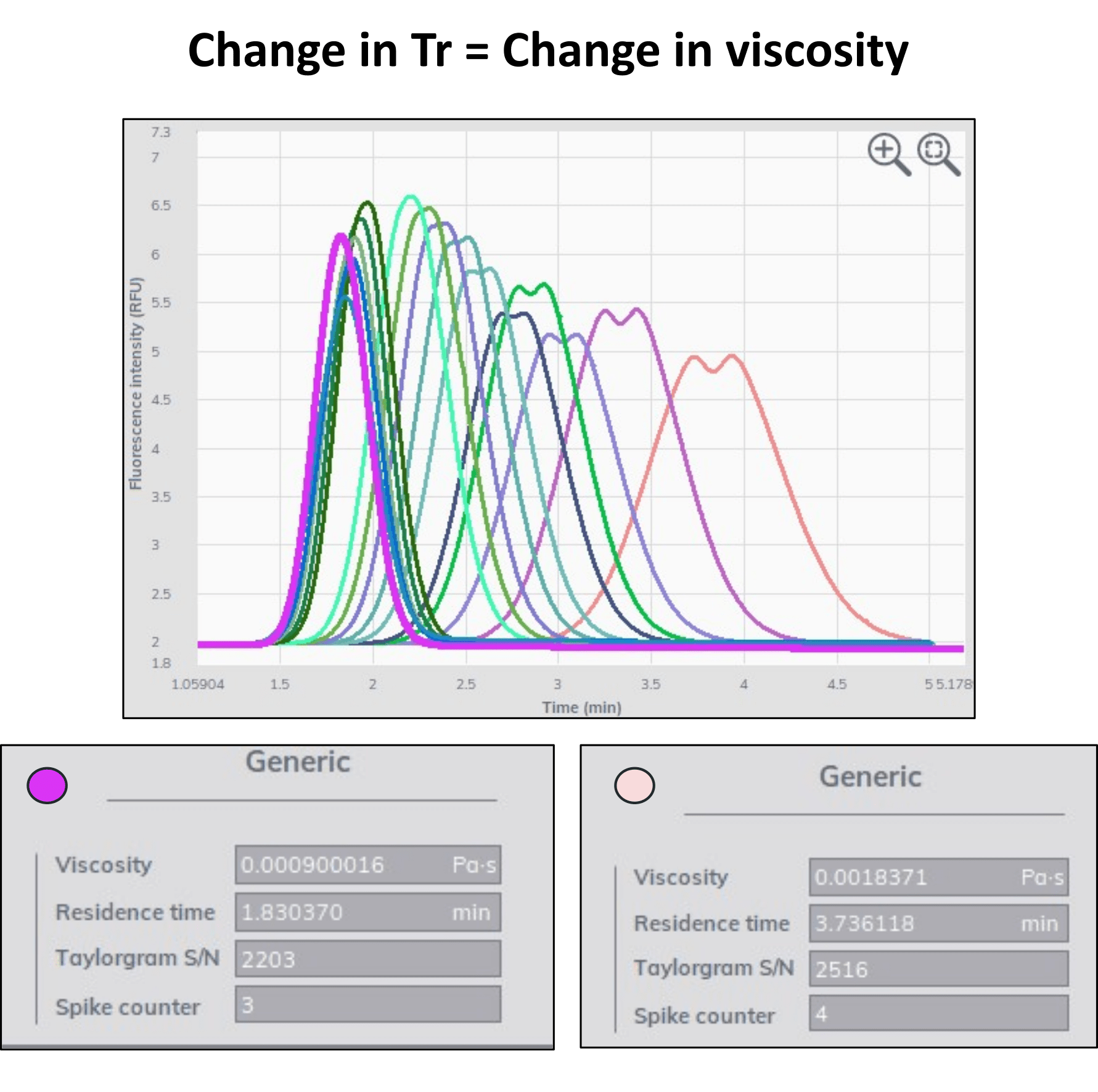
The sample passes through a capillary in the laminar flow range, at a constant temperature and a constant pressure. Because those two are held constant, the only parameter that can change the residence time is the viscosity of the sample.
Residence time, also called retention time, is the time it takes the sample to reach the detector, measured from the top of the Taylorgram.
Assuming you have run a sample of known viscosity, for example PBS buffer, the change from that retention time can be used directly to calculate the change in viscosity. In every FIDA measurement the viscosity is calculated from the time lapse between sample introduction into the capillary and the peak point at the detector.
Flow Induced Dispersion Analysis (FIDA) is an efficient, in-solution method for protein characterisation, measuring molecular size (hydrodynamic radius), aggregation, and complex molecular interactions including binding affinity and kinetics. Because laminar flow is what makes Taylor's conditions achievable, and regulating flow speed is central to assay design, the Fida instrument was built to measure and compensate viscosity for every sample measured.
Taylor's conditions are the criteria for achieving Taylor dispersion, the phenomenon where a solute spreads axially as it flows through a capillary under laminar flow. They are what make a measurement accurate and reproducible. Flow that is too slow or too fast disrupts the laminar flow, and Taylor's conditions are then not achieved.
Measuring viscosity in the same run is not only a convenience. It removes a step from the assay workflow, and it removes the largest source of error in the size calculation, because there is no viscosity value for the user to supply wrongly.
The Fida instrument can therefore also be used as an accurate viscometer, measuring viscosities from 0.89 cP up to more than 20 cP, and resolving changes as low as 0.2 cP. Its autosampler gives accurate temperature control in the measurement chamber, so temperature induced viscosity changes are managed rather than left to drift.
How do you correct for viscosity?
Viscosity compensation is the automatic use of the correct viscosity in the Stokes-Einstein correlation, rather than an assumed viscosity of water. In FIDA it is applied from the sample's own run, so no separate measurement and no assumed value are involved.
In a normal titration the zero analyte point is often in PBS, and its residence time serves as the water viscosity reference for the whole data set. If the buffer itself is more viscous than water, for instance because it contains glycerol, the reference comes from a standard molecule run once in an aqueous buffer at the assay temperature. The full walkthrough, including the standards for each detector, is in Is it possible to work in PEG, glycerol or DMSO with FIDA?
The rule is short: you should always compensate for viscosity changes.
What happens if you do not compensate for viscosity?
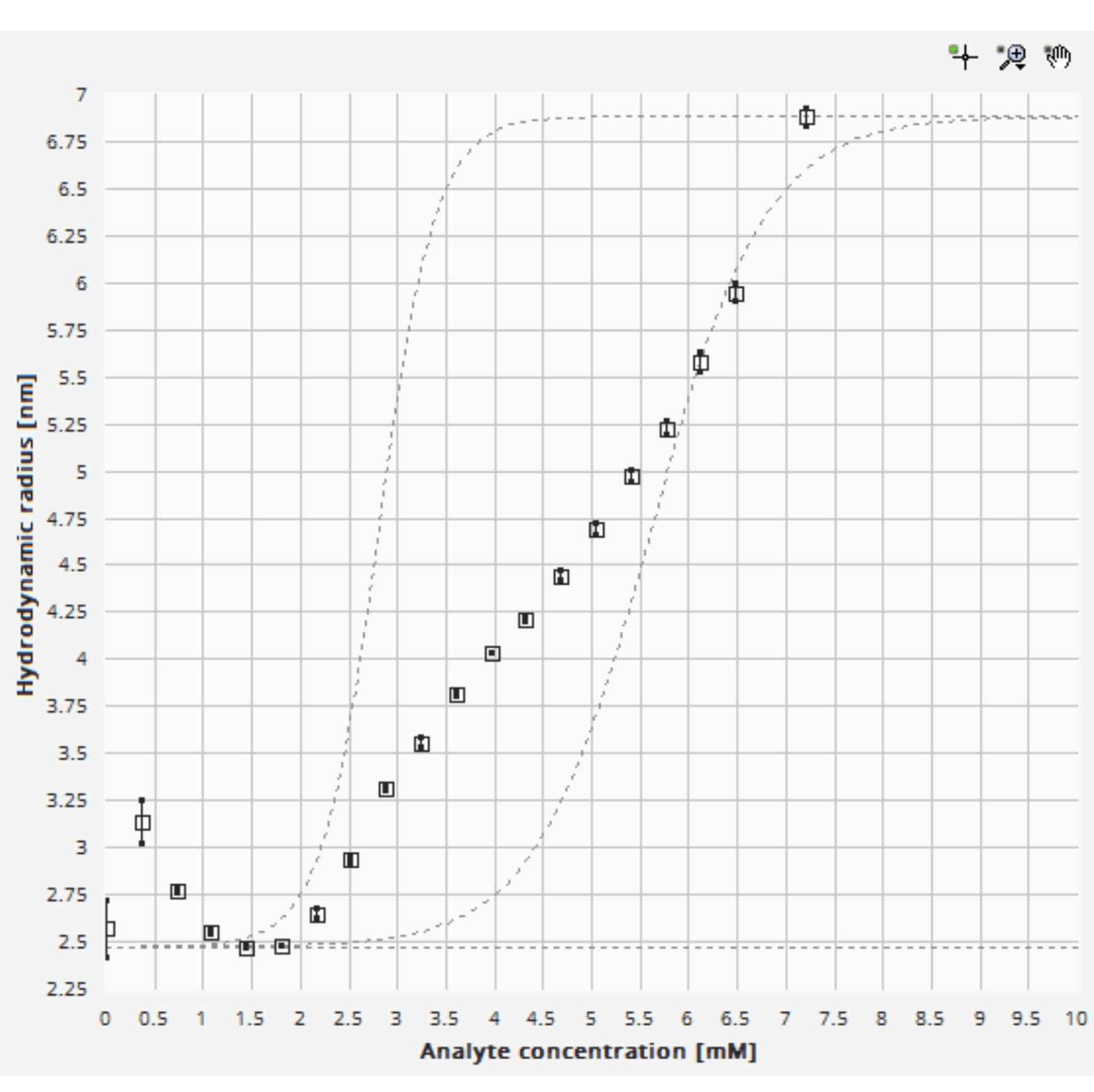
Without compensation, measured size grows steeply towards the top of a concentration series, because viscosity rises with concentration and the effect is exponential rather than linear. With compensation applied to the same data set, all the top concentration points return the same size.
This is worth stating plainly because uncompensated data does not look broken. It looks like a real trend, and it can be mistaken for genuine association or aggregation at high concentration.
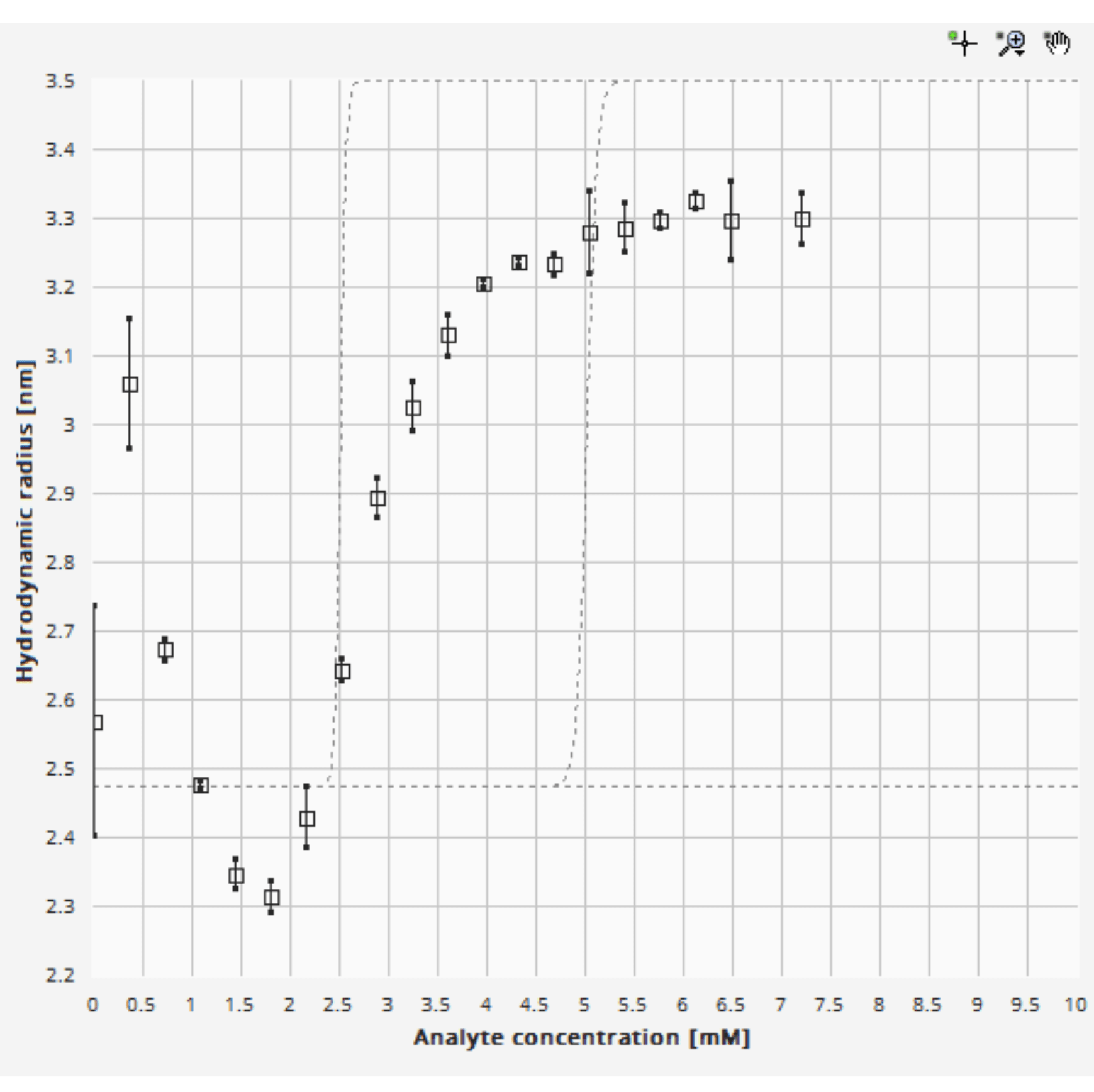
If you do not have a zero analyte data point to use for compensation, the average retention time of 1.8 minutes at 25 degrees Celsius can be used instead.
How do you extract viscosity data from your results?
Send your fitted data to the QC dashboard, which gives an overview of all QC parameters including viscosity. Configure the report to include viscosity, generate the report, and the viscosity data for all your samples can then be plotted in any software and fitted to whichever model is relevant.
Frequently asked questions
Does viscosity impact FIDA measurement?
Sample viscosity is measured with every single run and is automatically compensated for in hydrodynamic radius measurements. The autosampler gives accurate temperature control in the measurement chamber and therefore precise viscosity control. The impact of viscosity on the measurement is prevented rather than corrected afterwards.
Does viscosity impact the final FIDA read-out?
No. FIDA provides precise viscosity measurements and any change in viscosity is accommodated in the FIDA data analysis. The correction is built into every FIDA measurement, including binding studies, stability studies and quantifications, so nothing has to be corrected manually and the data stays correct even when viscosity changes unexpectedly.
Can the Fida instrument be used as a viscometer?
Yes. Fida instruments can be used as an accurate viscosity meter.
Related resources
The application note Robust Viscosity Measurement: Advancing Biologic Formulation with FIDA Technology is the closest read for formulation work, and Assessment of Sample Quality with Every Measurement shows viscosity alongside the other parameters from the same run. The infographic Quality Control: 8 Parameters in 4 Minutes summarises them.
On this site: the Sample Viscosity readout, Is it possible to work in PEG, glycerol or DMSO with FIDA? and the Molecular Size readout.