Which capillary should you use, and how do you look after it?
Which capillary to use depends on your sample and assay. The standard capillary is ideal for most assays, the permanently coated capillary is ideal for molecules that tend to stick to a glass surface, the kinetics capillary is ideal to study fast kinetics and larger molecules and to speed up your assay, and the slim capillary is an intermediate between the standard and the kinetics capillary. To look after a capillary, end every sequence with a water wash and replace it after 400 runs.
What does it mean that FIDA is capillary-based?
FIDA is an in-solution, capillary-based technology, which builds on the principles of fluid mechanics. It is based on laminar flow in a microfluidic flow capillary: the capillary is filled with a liquid of interest (analyte), and a plug of the molecule of interest (indicator) is introduced and pushed through the capillary with the analyte. This causes a parabolic deformation of the plug, and the size of the deformation depends on the size of the indicator, as described by Taylor dispersion. This is explained in the FIDA 101 course, section The FIDA Principle, on the Fidabio Learning Hub, and in What is FIDA?
What type of capillaries are there?
Fidabio offers four capillaries with different properties that you can choose between to optimise your assay, as described in the Changing the capillary course, section When to change your capillary, on the Fidabio Learning Hub.
- The standard capillary is 1 m long with a diameter of 75 µm and a glass surface. It is ideal for most assays and gives the best resolution.
- The permanently coated capillary is also 1 m long with a diameter of 75 µm, but is coated with a hydrophilic material. It is ideal when you are working with molecules that tend to stick to a glass surface.
- The kinetics capillary is 70 cm long with a diameter of 50 µm. The shorter and narrower capillary lets you run assays at higher pressure while staying within Taylor's conditions. It is ideal to study fast kinetics and larger molecules, and in general to speed up your assay. You do, however, lose some resolution, as molecules have less time and space to diffuse.
- The slim capillary is 1 m long with a diameter of 50 µm, an intermediate between the standard and the kinetics capillary. It lets you run assays at higher pressure while staying within Taylor's conditions, with less loss of resolution than the kinetics capillary.
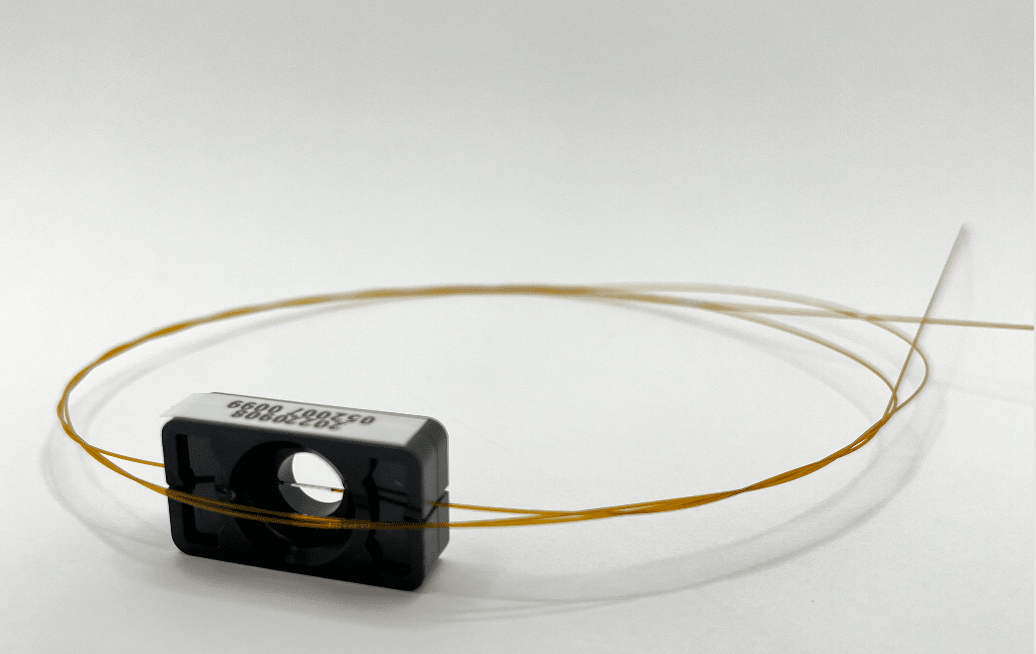
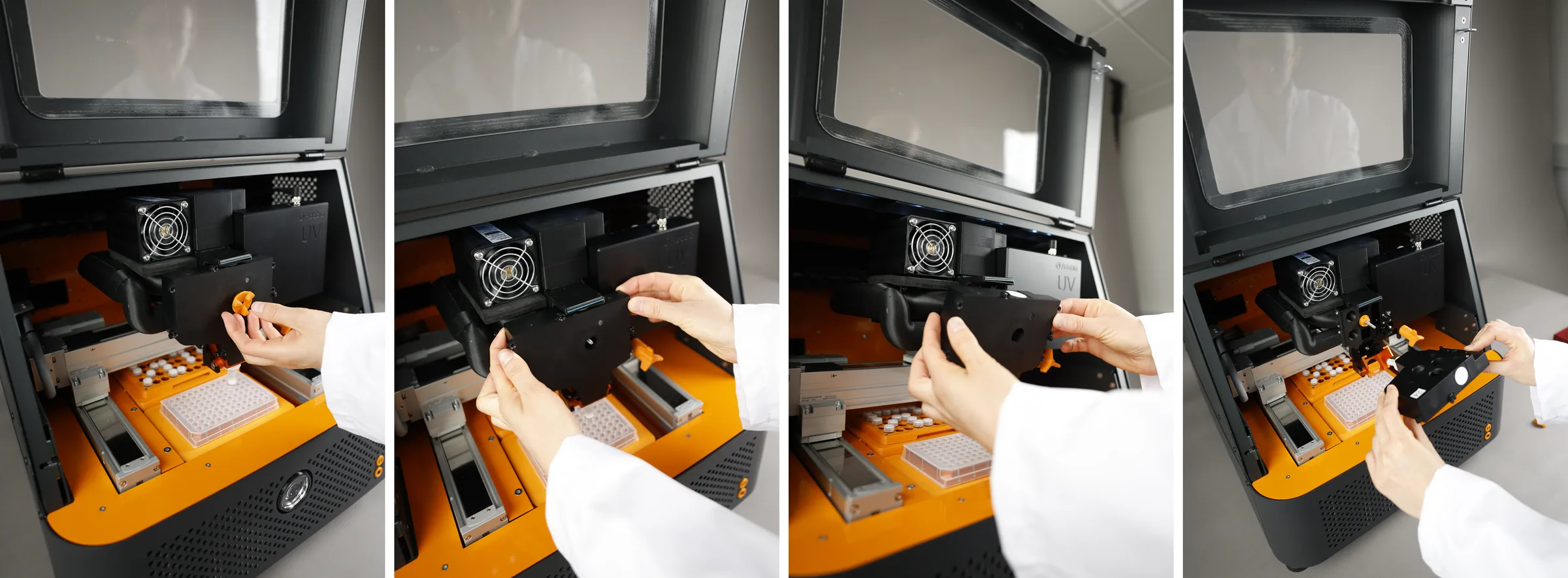
Custom capillaries are made on demand, after consultation with your regional sales developer or field application scientist. In the newest Fida model, the capillaries come as click-on cartridges, as listed in the Fida instruments comparison table.
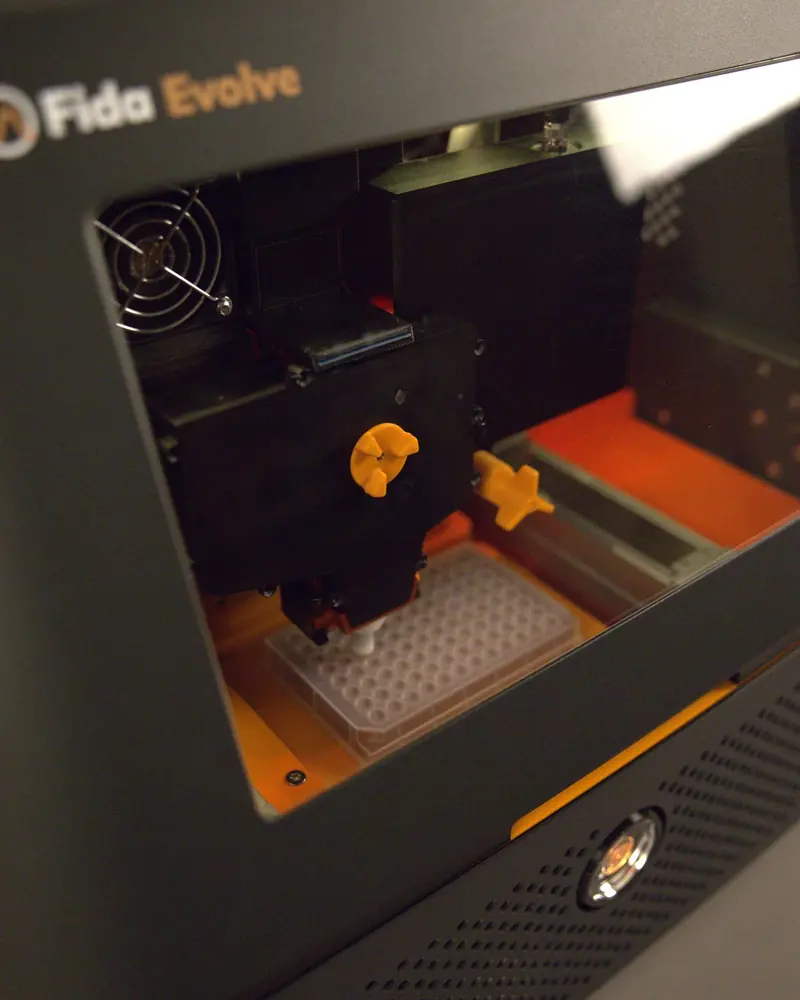
To change between a coated and an uncoated surface, you can either swap the capillary (in the newest Fida model, the click-on cartridge) or apply a dynamic coating to the uncoated capillary. All consumables can be ordered directly through shop.fidabio.com. The dimensions of the standard capillary are explained in What is the size of the capillary?
What types of coating are there?
All Fida capillaries are made of glass (silicon dioxide, O=Si=O), and only the permanently coated capillary has a permanent coating on it. The glass carries negative charges on its surface (silanol groups, -SiOH). When a glass surface encounters an aqueous solution, ionisation occurs, which leads to a negative surface charge. Many proteins, and especially DNA and RNA binding proteins, carry net positive charges and are therefore electrostatically attracted to glass surfaces. See What is protein stickiness?
There are two types of coating: dynamic coating, which can be applied to and removed from an uncoated capillary, and the permanently coated capillary.
The dynamic coating presents a hydrophilic, non-charged surface and can be stripped and reapplied. Therefore, even chemicals that would strip the coating can be used. There are no restrictions on pH with this coating. How to apply it is described in How to coat a capillary to prevent sample sticking?
The permanent coating makes the surface of the capillary more hydrophilic and shields the charges, showing higher performance in reducing stickiness at neutral pH. Purchase at shop.fidabio.com (registered users only). Why proteins stick, and what else helps, is covered in How do you stop protein sticking to surfaces?
Capillary handling and storage (clogging prevention)
In order to prevent capillary clogging, make sure you follow these dos and don'ts.
Standard capillary
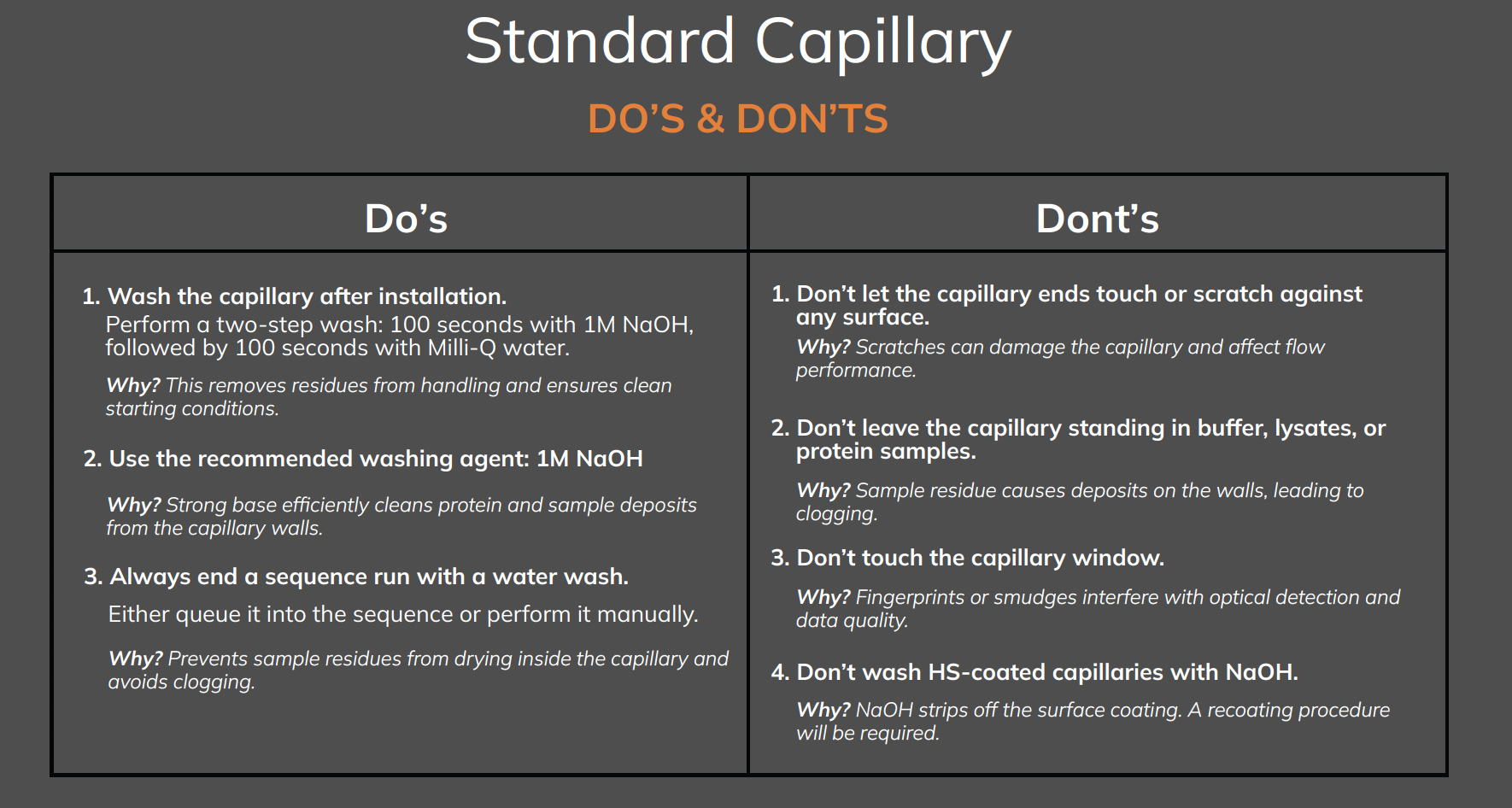
Storage instructions for the standard capillary
1. Short-term storage (a few days):
- Rinse the capillary thoroughly with 1M NaOH and subsequently with milliQ water.
- Leave the capillary mounted on the instrument.
2. Long-term storage (a few weeks):
- Rinse the capillary thoroughly with 1M NaOH and subsequently with milliQ water.
- Place an empty glass vial (with a cap) at the inlet and blow air through to dry.
Follow the same steps for the Fidabio kinetics capillary (ID: 50 μm, Ltot: 70 cm, Leff: 54 cm).
Permanently coated capillary
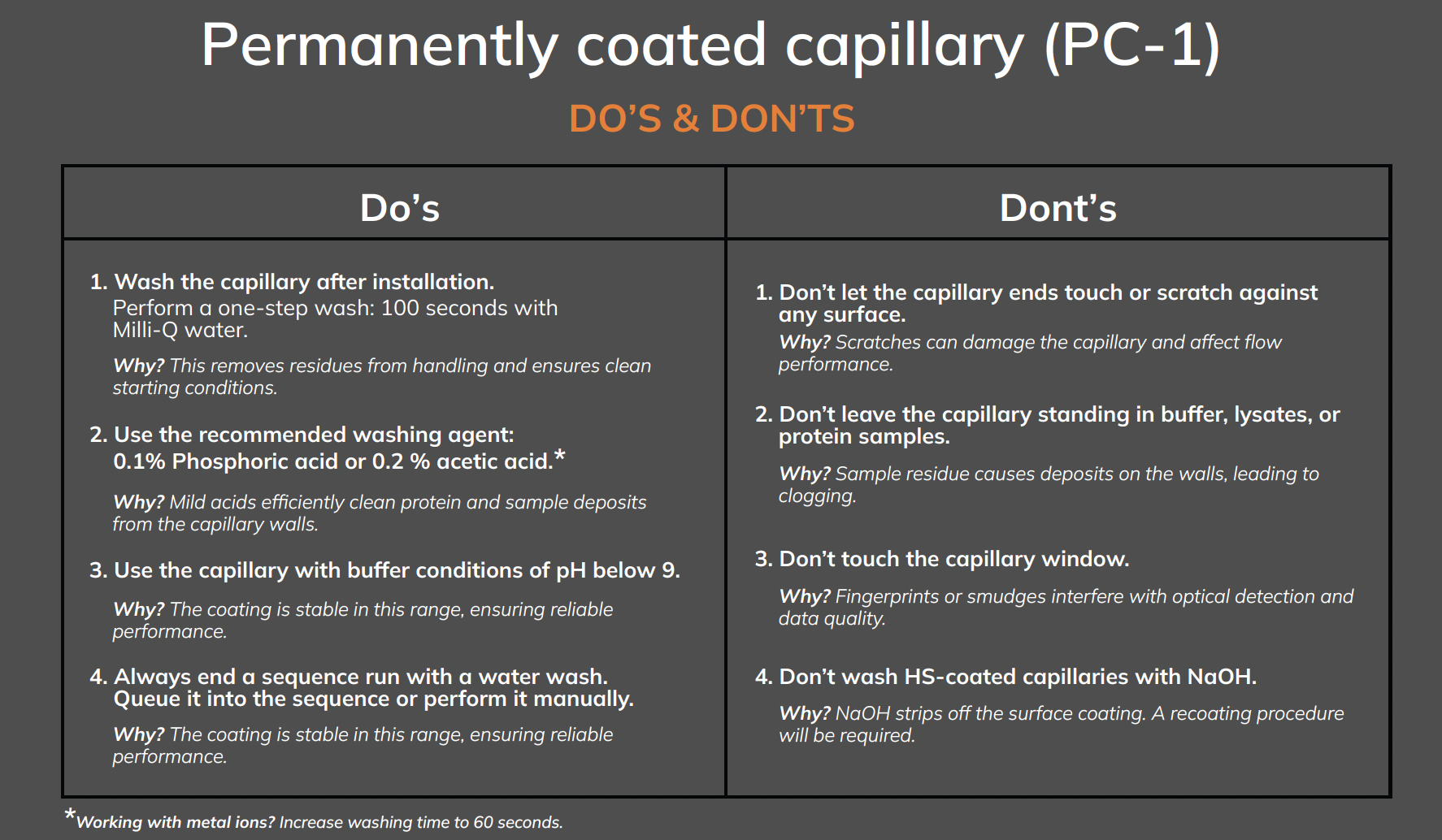
Storage instructions for the permanently coated capillary
Short-term storage (a few days):
- Rinse the capillary thoroughly with 0.1% phosphoric acid and subsequently with milliQ water.
- Leave the capillary mounted on the instrument.
Long-term storage (a few weeks):
- Rinse the capillary thoroughly with 0.1% phosphoric acid and subsequently with milliQ water.
- Place an empty glass vial (with a cap) at the inlet and blow air through to dry.
- Dismount the capillary.
- Store it on the original cardboard base.
What causes a capillary to clog?
Capillary clogging is rare. As described in the Changing the capillary and Clogged Capillary courses on the Fidabio Learning Hub, the most common reasons are a capillary left or stored in buffer, where crystals form; metals and buffer ions that are not compatible and fall out of solution when mixed, for example phosphate and magnesium; and sticky or aggregated proteins that accumulate over time. To avoid it, end every sequence with a water rinse, and extend the washing steps for very sticky samples. How to rescue a clogged capillary with stronger washes is covered in the Clogged Capillary course, section Solutions, on the Fidabio Learning Hub.
If in doubt, please contact support@fidabio.com.
How many runs (measurement) can be done per capillary?
We recommend running up to 400 runs per capillary. Overusing this consumable might impact the results. All FIDA capillaries have a recommended lifetime of 400 runs, as described in the Changing the capillary course on the Fidabio Learning Hub.
Frequently asked questions
How do I know if my capillary is clogged?
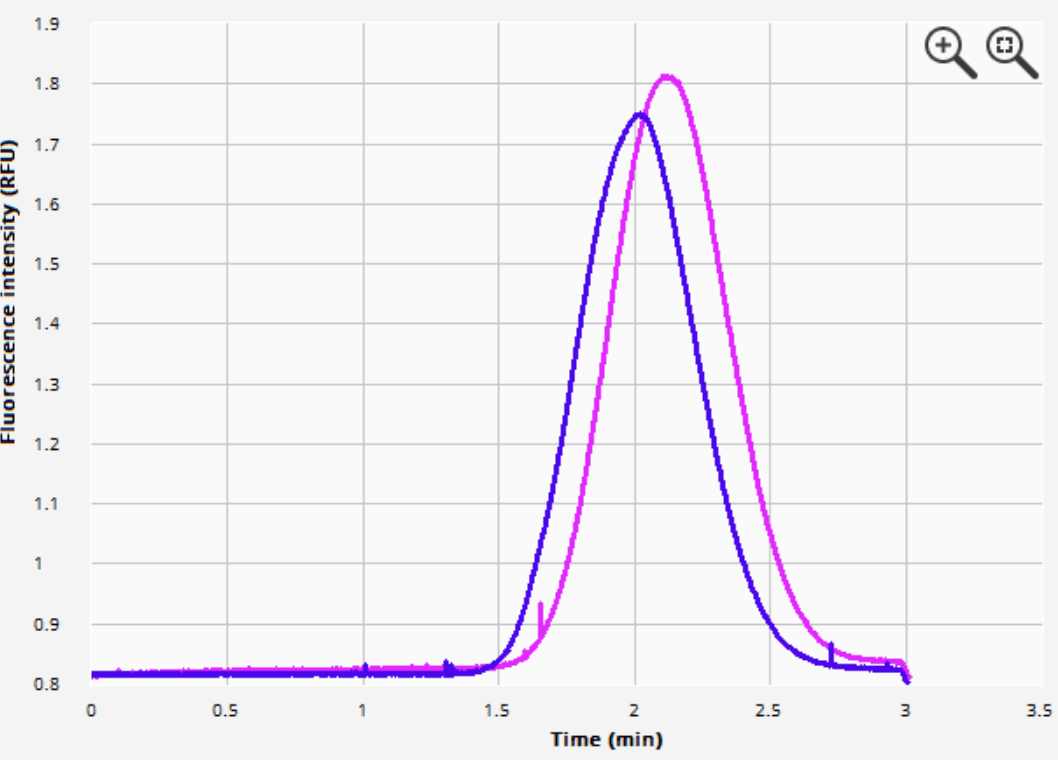
A fully clogged capillary gives no signal during runs and no baseline activity during washing steps. A partial clog shows as fluctuating residence times (tR) for the same sample.
Which capillary should I use for sticky proteins?
The permanently coated capillary, which is ideal for molecules that tend to stick to a glass surface. Dynamic coating on the uncoated capillary is another option, with no restrictions on pH.
Which capillary should I use for fast kinetics?
The kinetics capillary. The shorter and narrower capillary lets you run assays at higher pressure while staying within Taylor's conditions, which makes it ideal to study fast kinetics. See How to measure binding kinetics in solution?
Related resources
Working with sticky samples? The knowledge base article What is protein stickiness? explains what makes proteins stick to surfaces such as the capillary, and the stickiness readout shows how the Fida software indicates whether a sample is sticking to the capillary walls.
Want to learn more? The Changing the capillary and Clogged Capillary courses walk you through changing, washing and rescuing a capillary: register for the Fidabio Learning Hub.