Knowledge Base
Technology
Hardware
Software
Quality Control
Sample
Becoming and being a FIDA user
Protein analysis and characterisation
Consumables
Protein stability and storage
Capillary handling and storage (clogging prevention)
In order to prevent capillary clogging, make sure you follow these do's and don't's:
Standard Capillary:
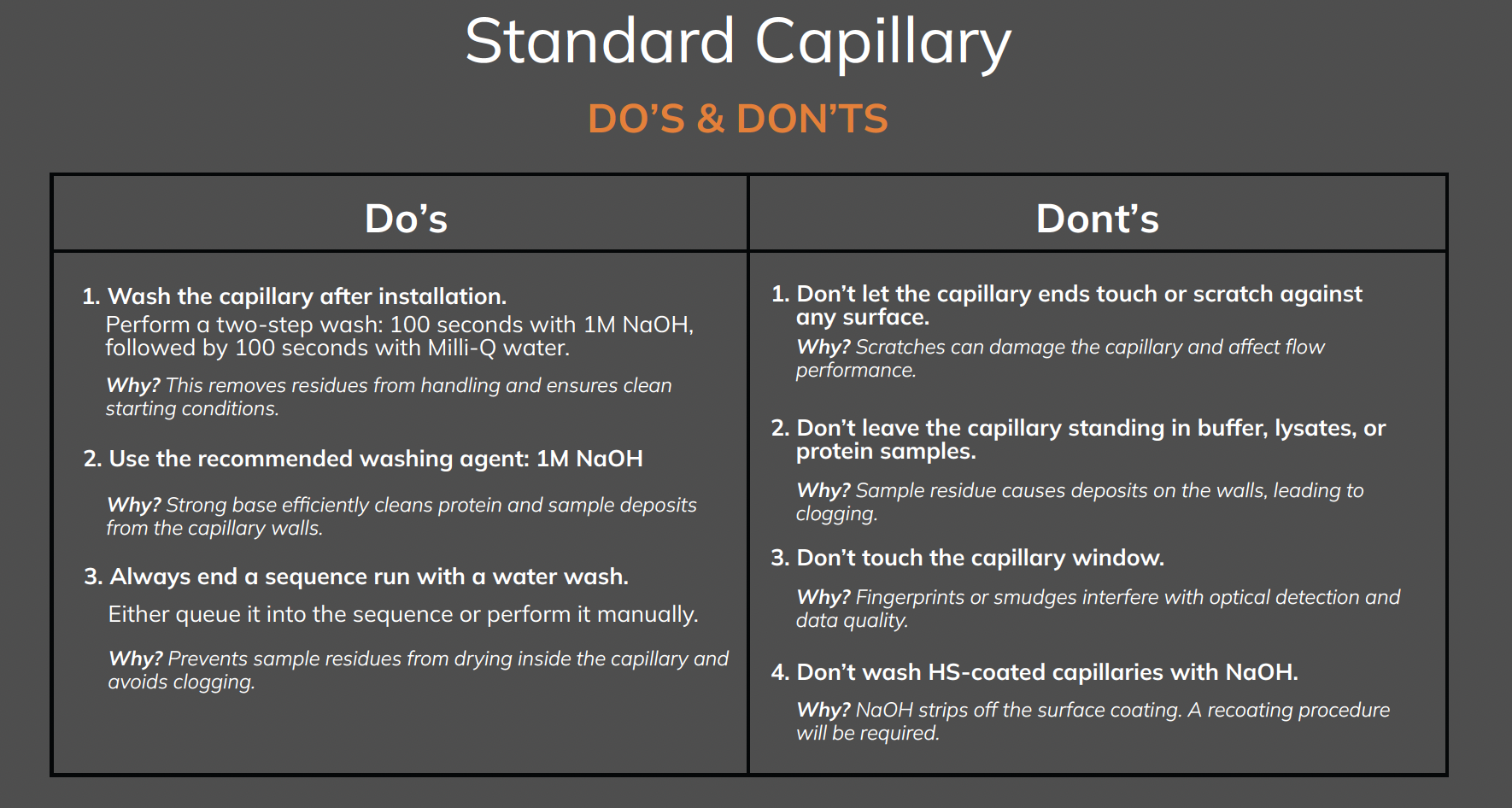
Storage instructions for the standard capillary
1. Short-term storage (a few days):
- Rinse the capillary thoroughly with 1M NaOH and subsequently with milliQ water.
- Leave the capillary mounted on the instrument.
2. Long-term storage (a few weeks)
- Rinse the capillary thoroughly with 1M NaOH and subsequently with milliQ water.
- Place an empty glass vial (with a cap) at the inlet and blow air through to dry.
Follow the same steps for the Fidabio Kinetics capillary (ID: 50 μm, Ltot: 70 cm, Leff: 54cm)
Permemently coated capillary
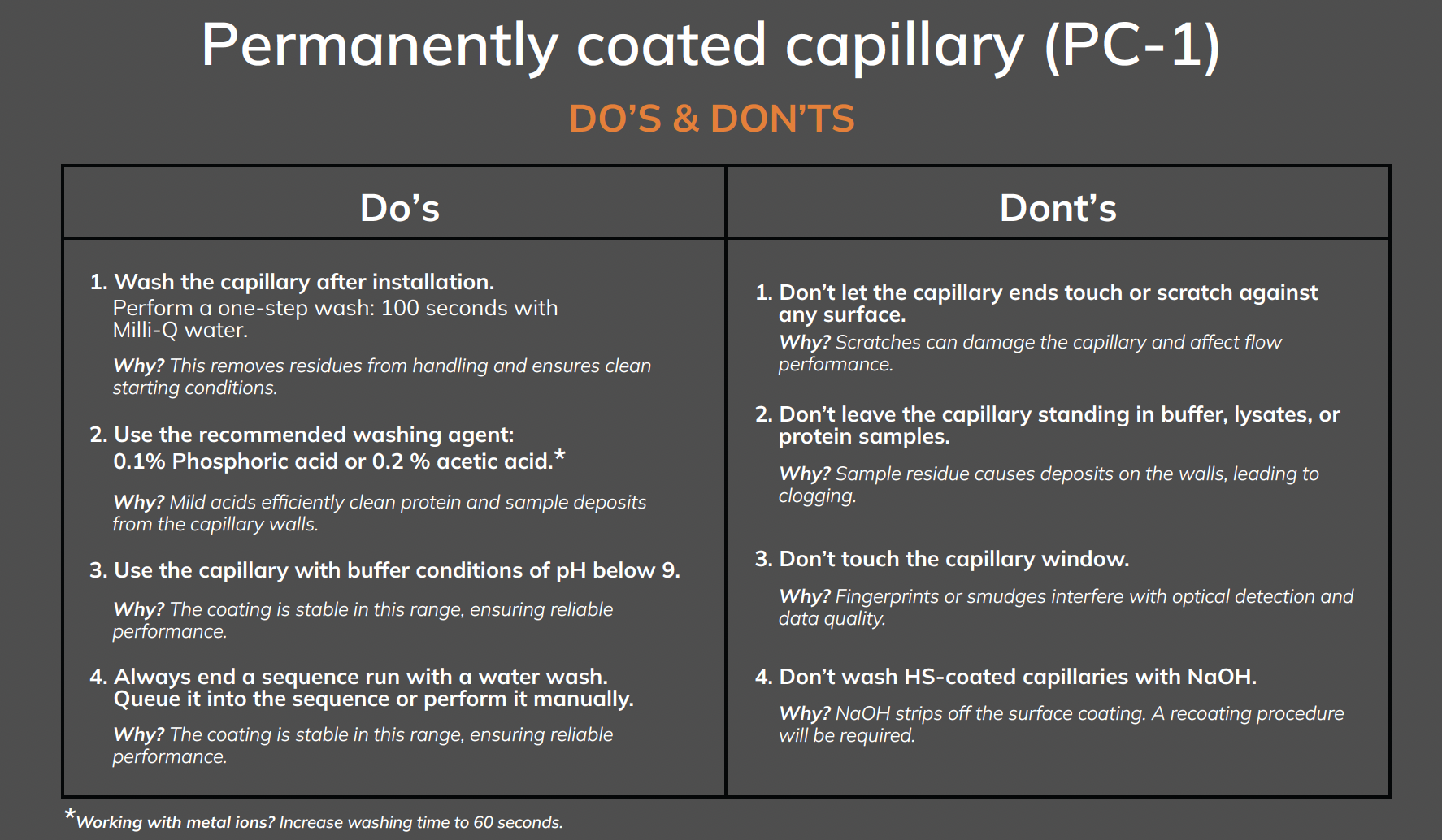
Storage instructions for the permanently coated capillary
Short-term storage (a few days):
- Rinse the capillary thoroughly with 0.1% phosphoric acid and subsequently with miliQ water.
- Leave the capillary mounted on the instrument.
Long-term storage (a few weeks):
- Rinse the capillary thoroughly with 0.1% phosphoric acid and subsequently with miliQ water.
- Place an empty glass vial (with a cap) at the inlet and blow air through to dry.
- Dismount the capillary.
- Store it on the original cardboard base.
If in doubt please contact: support@fidabio.com


